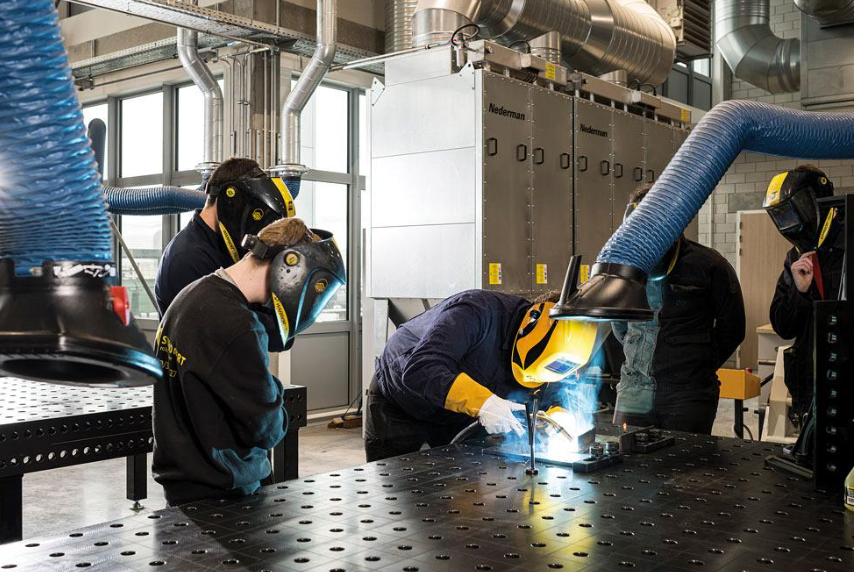

Fabrication shops invest in extraction equipment, install ductwork, and follow safety protocols. Yet workers still report inconsistent air quality, lingering odors in certain zones, and respiratory irritation that doesn’t match the ventilation system on paper. The problem is rarely the extraction unit itself. Most shops have structural design flaws in how air actually moves through the space, and these flaws remain invisible until they damage worker health or trigger compliance audits. Understanding circulation design patterns helps facility managers diagnose why their shops feel unsafe even when equipment suggests otherwise.
Key Takeaways
- Dead zones in shop layouts prevent fumes from reaching extraction points, creating pockets of poor air quality that equipment cannot reach
- Negative pressure imbalances force contaminated air back into breathing zones instead of exhausting it consistently
- Equipment placement decisions often ignore actual air movement patterns, resulting in short-circuiting where fresh intake air bypasses contaminated zones
- Structural obstructions like walls, equipment clusters, and raised platforms block circulation and reduce extraction effectiveness across the shop floor
Why It Matters
Air circulation design determines whether extraction systems actually protect workers or merely create the appearance of ventilation. A shop with inadequate circulation will experience localized pockets of high fume concentration, uneven air movement, and worker exposure that extraction equipment cannot address. When facilities focus only on compliance without understanding circulation physics, they often discover too late that their systems fail under real production conditions.
Proper circulation design prevents the costly mistakes of retrofitting ductwork, relocating equipment, or replacing systems that seem broken but are actually fighting poor airflow geometry. Managers who understand circulation patterns can troubleshoot extraction failures before they escalate into health incidents or regulatory violations. The connection between welding safety tips and shop layout design reveals why equipment selection alone solves only half the problem.
Understanding Dead Zones in Fabrication Spaces
Dead zones form where air stagnates because circulation pathways are blocked or incomplete. These typically occur in corners, behind large equipment, under work tables, and in alcoves where ductwork cannot reach. Fumes accumulate in dead zones because air never moves through them with enough velocity to push contaminants toward extraction points.
Shops often discover dead zones only after workers report consistent complaints from specific locations. A welder working in a corner station, for example, may experience fume exposure far exceeding other stations even though all positions use identical extraction equipment. This pattern signals a dead zone where incoming air and extracted air never properly exchange.
Identifying dead zones requires walking the shop floor during production and observing where smoke or vapor accumulates without moving. Areas where fume clouds hang in place rather than flowing toward ducts indicate circulation failures. Temperature shifts also reveal dead zones, as stagnant air often feels noticeably warmer or cooler than surrounding space.
See also: What to Do After a Personal Injury: A Practical Guide to the Next Steps
Negative Pressure and Air Imbalance Problems
Extraction systems remove air from the shop faster than replacement air enters, creating negative pressure zones. When negative pressure becomes too extreme, it pulls incoming air backward through doors, windows, and any available opening, including contaminated exhaust ducts that should remain one-way.
In shops with severe imbalance, workers notice doors becoming harder to open, drafts flowing in unexpected directions, and fumes appearing near entry points. These are signs that the shop is trying to fill a vacuum created by over-extraction relative to make-up air capacity. The result is chaotic air movement that defeats planned circulation patterns.
Proper design maintains slight negative pressure (enough to prevent fume escape but not so much that it creates suction problems) by balancing extraction capacity against replacement air flow. Shops that skip this calculation often experience both extraction failures and unexpected secondary contamination from poorly controlled make-up air.
Equipment Placement and Short-Circuiting
Short-circuiting occurs when fresh intake air travels directly to extraction ducts without passing through contaminated work zones. A common example is positioning a make-up air intake near an extraction hood. Fresh air enters, travels the shortest possible path to the hood, and exits, never actually mixing with shop air or capturing fumes from other stations.
This creates an illusion of effective extraction at that one location while fumes accumulate elsewhere in the shop. Workers at distant stations experience poor air quality while the system shows acceptable performance metrics at the extraction point.
Short-circuiting is difficult to spot without observing actual air movement using smoke or thermal imaging. Many shops blame their extraction equipment for poor performance when the real problem is intake and exhaust placement that allows air to bypass the working area.
Structural Obstructions and Circulation Barriers
Partitions, storage racks, equipment clusters, and elevated work platforms all disrupt airflow. Walls between work stations create separate pressure zones that prevent circulation from reaching all workers equally. A tall parts rack positioned between an intake vent and work stations blocks air from reaching the stations behind it.
Shops frequently rearrange layouts to maximize floor space without considering how the new arrangement fragments air circulation. Equipment that moves during facility changes often ends up blocking the very pathways that extraction systems depend on.
Ceiling-height obstructions prove particularly problematic because air tends to stratify vertically. If overhead storage or structural beams block the upper portions of the shop, air cannot circulate freely from one zone to another, and fumes pool below these obstructions regardless of extraction capacity.
Real Shop Example: A Three-Station Fabrication Layout
Consider a mid-size job shop with three welding stations arranged in a line along one wall. The shop installed a wall-mounted extraction system over station two (the center position) and ducted it through the roof. On paper, the system should protect all three stations.
In practice, station two workers experience excellent extraction, but stations one and three show poor fume capture. The shop owner suspects equipment failure, but the real issue is circulation geometry. Air enters through a side door and flows toward the extraction hood at station two. Station one, positioned upwind of the hood, experiences minimal air movement because intake air travels past it toward the extraction point. Station three, positioned downwind, creates a low-pressure zone that pulls contaminated air away from the hood instead of toward it.
Relocating the intake vent to the opposite wall would establish cross-shop circulation. Air would flow from the new intake, across all three stations, and toward the extraction hood. This simple layout adjustment requires no new equipment but dramatically improves protection at stations one and three by ensuring air actually passes through each work zone before extraction.
Diagnosing Circulation Problems
Before assuming equipment failure, perform a circulation audit. Walk the shop during full production and observe smoke or vapor movement using a handheld smoke source. Note areas where smoke lingers, reverses direction, or fails to move toward extraction points. Document the location of every entry and exit point for air, including doors, windows, makeup air vents, and exhaust ducts.
Check for temperature uniformity across the shop. Significant temperature differences between areas indicate stagnant zones where air is not circulating. Use simple thermal observation; areas that feel noticeably warmer or cooler than surrounding space have poor circulation.
Review the shop layout and identify physical obstructions that block air pathways. Large equipment, tall storage, partitions, and raised platforms should all be mapped relative to extraction points and intake vents. Note any changes in layout that occurred since the extraction system was installed.
Actionable Takeaways
- Map your shop’s actual air entry and exit points and trace the intended circulation path on paper. Compare this to where workers report air quality problems; mismatches often indicate short-circuiting or dead zones.
- Conduct a smoke test during production to observe actual air movement. Identify any zones where fume accumulation occurs rather than flows, and mark these as priority circulation problem areas.
- Evaluate equipment and storage placement for obstructions that block air pathways. Relocate high-profile items away from circulation corridors if they fragment air movement.
- Verify that intake air enters from a location that ensures it flows through all work zones before reaching extraction ducts. Adjust intake positioning if intake air currently short-circuits to extraction points.
- Measure pressure differences between intake and exhaust using a simple manometer. Extreme negative pressure indicates over-extraction relative to make-up air capacity, leading to chaotic air movement.
- Document baseline air quality observations before and after circulation adjustments to verify that design changes actually improve worker exposure and extraction effectiveness.
Conclusion
Fabrication shops that understand air circulation physics diagnose and solve extraction failures that equipment-only approaches cannot address. Dead zones, negative pressure imbalance, short-circuiting, and structural obstructions all undermine system performance even when extraction units operate correctly. A systematic circulation audit followed by targeted layout adjustments often restores air quality protection without major capital investment or equipment replacement. Shops that prioritize circulation design gain safer working conditions, more consistent extraction performance, and protection that holds up under production pressure.
FAQ
What causes dead zones in welding shops?
Dead zones form wherever air stagnation occurs because circulation pathways are blocked or intake and exhaust points are positioned too far apart. Corners, spaces behind large equipment, and areas beneath work tables commonly become dead zones because air never moves through them with sufficient velocity to carry fumes to extraction points. Blocked ductwork, missing intake vents, or extraction hoods positioned only near one station also leave other areas of the shop with stagnant air.
How do I know if my shop has negative pressure problems?
Negative pressure manifests as difficulty opening doors, unexpected drafts, or fumes appearing near entry points rather than being captured by extraction. Workers may report that shop doors feel heavy or that air seems to be sucked outward. Using a simple manometer to measure pressure difference between the shop and outside reveals whether negative pressure exceeds design tolerances and requires adjustment to intake capacity.
Can I fix air circulation without replacing my extraction equipment?
Yes, many circulation problems resolve through layout adjustments, ductwork repositioning, or intake vent relocation without replacing the extraction system itself. Relocating intake air to the opposite wall from extraction, moving obstructing equipment away from air pathways, and removing partitions that fragment circulation often restore performance at a fraction of replacement cost. However, some shops with severely undersized systems may require additional equipment after circulation improvements confirm that extraction capacity was the limiting factor.
What is short-circuiting and why does it matter?
Short-circuiting occurs when fresh intake air travels directly to extraction ducts without passing through work zones or mixing with contaminated shop air. This creates the false appearance of effective extraction at one location while fumes accumulate in the rest of the shop. Short-circuiting is difficult to detect without smoke testing and often causes shops to blame their extraction systems for poor performance when the real problem is intake and exhaust positioning.
How often should I perform a circulation audit of my shop?
Perform a detailed circulation audit whenever extraction performance seems inconsistent, after any significant layout change, or annually as routine preventive maintenance. Smoke testing during production takes a few hours but reveals whether air movement patterns have changed or whether equipment repositioning has inadvertently created new circulation problems. Shops with stable layouts can rely on worker feedback to identify when an audit is warranted.
Does shop size affect circulation design requirements?
Shop size significantly affects circulation complexity. Small shops often require simpler designs with fewer intake and exhaust points, while larger spaces need distributed intake vents and multiple extraction zones to prevent air stratification and stagnation. Taller ceilings increase the risk of air stratification where contaminants pool at mid-level while upper air sits still. Single-station shops can often rely on point extraction, but multi-station facilities require intentional cross-shop circulation patterns that ensure all workers receive equivalent protection.