Newsletter Subscribe
Enter your email address below and subscribe to our newsletter
Enter your email address below and subscribe to our newsletter

 ByJohn A
Wildlife observation has evolved significantly with modern optical and thermal technology, allowing enthusiasts, researchers, and field professionals to observe animals in conditions that were previously impossible. One of the most impactful innovations in this space is the clip-on thermal imaging attachment, which transforms traditional daytime optics into powerful night-vision and low-light observation tools. This technology enables users to detect heat signatures of animals through fog, darkness, and dense vegetation without disturbing their natural behavior.
For wildlife observers, this means greater accuracy, safer fieldwork, and improved tracking of nocturnal species. Whether monitoring deer movement in forests, studying predators in open terrain, or conducting conservation surveys, thermal imaging provides a non-invasive and highly effective solution. Modern systems are designed to integrate seamlessly with existing scopes, making them practical for both beginners and professionals who already own optical equipment.
Wildlife activity often peaks during dawn, dusk, and nighttime hours when visibility is limited. Traditional optics struggle in such conditions, leaving observers dependent on artificial lighting, which can disturb animals and alter their behavior. A clip-on thermal imaging attachment solves this problem by detecting heat differences rather than relying on visible light.
The biggest advantage is stealth. Animals cannot detect thermal sensors, allowing for completely natural observation. This is especially useful for studying shy or nocturnal species such as foxes, wild boars, and owls. In conservation work, this technology also helps researchers track endangered species without physical interference.
Additionally, thermal imaging reduces the risk of misidentification. Heat signatures clearly distinguish animals from their surroundings, even in thick brush or poor weather conditions. This enhances both accuracy and efficiency in field operations.
A clip-on thermal imaging attachment functions by detecting infrared radiation emitted by all warm objects. Every living creature produces body heat, which is invisible to the naked eye but detectable through thermal sensors. The device captures this radiation and converts it into a visible image, often displayed in contrasting color palettes such as white-hot or black-hot modes.
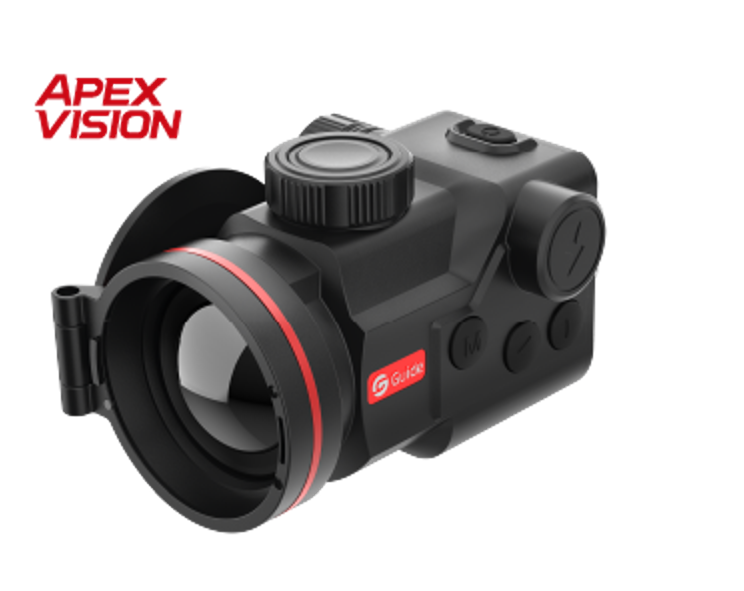
The processed image is then aligned with the user’s existing optical scope, allowing seamless transition between daytime and nighttime use. This is why the clip-on thermal imaging attachmen is so widely preferred—it does not require removing or replacing the primary optic. Instead, it attaches directly in front of the scope, maintaining zeroing and alignment.
Modern systems also include digital enhancements such as image stabilization, zoom adjustment, and object recognition. These features help users distinguish between different types of heat sources, such as animals, humans, or environmental heat reflections like rocks and water.
When selecting a thermal clip-on device for wildlife observation, several important features should be considered. Resolution is one of the most critical factors, as higher resolution sensors provide clearer and more detailed images of distant animals. Frame rate is equally important, especially when tracking moving wildlife.
Battery life also plays a major role in field usability. Long observation sessions require devices that can operate efficiently for several hours without interruption. Durability is another essential factor, as wildlife environments often involve rough terrain, moisture, and temperature fluctuations.
Ease of mounting is also crucial. A good clip-on system should attach quickly and maintain stability without requiring constant adjustments. This ensures that observers can focus on wildlife rather than equipment handling.
One of the most important advantages of modern thermal technology is its compatibility with traditional optics. Many users already own magnified scopes, and thermal clip-on devices are designed to enhance rather than replace them. A highly popular configuration is the thermal clip on compatible with 3-9x scope, which allows users to maintain variable magnification while gaining thermal imaging capabilities.
This compatibility is especially useful for wildlife observation in varying terrain. At lower magnification, users can scan wide areas for animal movement, while higher magnification allows for detailed observation of specific targets. The seamless integration ensures that focus and alignment remain stable across different zoom levels.
Proper calibration is essential when pairing thermal devices with optical scopes. Once correctly aligned, the system delivers precise and consistent imaging, even during extended field use.
Thermal imaging offers several advantages that make it an essential tool for modern wildlife study. First, it significantly increases detection range. Animals that would normally be hidden in darkness or vegetation become visible due to their heat signatures.
Second, it improves safety for observers. Field researchers can identify potential threats such as large predators or unknown movements in the environment before approaching an area. This reduces risk during nighttime expeditions.
Third, it enhances data collection. Researchers can track animal behavior patterns more effectively, including migration routes, feeding habits, and territorial movements. This information is valuable for conservation planning and ecological research.
Finally, thermal imaging supports ethical observation. Since it does not rely on light or sound, it minimizes human impact on natural habitats, allowing animals to behave normally without disruption.
In recent years, Guide Outdoor has become a recognized name in advanced thermal imaging solutions designed for field use. Their systems focus on durability, precision, and user-friendly integration, making them suitable for both professionals and hobbyists engaged in wildlife observation.
Guide Outdoor devices are known for combining high-sensitivity thermal sensors with practical field design. This ensures clear imaging even in challenging environments such as dense forests, mountain regions, and low-temperature conditions. Their clip-on systems are engineered for stability, allowing users to attach them securely to existing optics without complex setup procedures.
Another strength of Guide Outdoor technology is its adaptability. Many of their models are designed to work effectively in different observation scenarios, from long-distance scanning to close-range wildlife tracking. This flexibility makes them a reliable choice for researchers and outdoor enthusiasts alike.
See also: How Haagen Dazs Coupon Offers Help Dessert Lovers Enjoy More Value
To maximize the performance of thermal imaging devices, users should follow a few practical field tips. First, always allow the device to calibrate properly before beginning observation. This ensures accurate heat detection and image clarity.
Second, use slow and controlled scanning movements when surveying an area. Rapid motion can make it difficult to distinguish between overlapping heat signatures.
Third, understand environmental influences. Weather conditions such as rain, fog, or high humidity can slightly affect thermal contrast, so adjusting settings accordingly can improve results.
Finally, practice regular maintenance. Keeping the lens clean and ensuring battery health will extend the life of the device and maintain consistent performance during fieldwork.
The integration of thermal imaging into wildlife observation has transformed how humans interact with and study nature. Devices like the clip-on thermal imaging attachment provide a powerful, non-intrusive way to observe animals in complete darkness and challenging environments. With compatibility options such as the thermal clip on compatible with 3-9x scope, users can enhance existing optics without replacing their entire setup.
Supported by innovations from companies like Guide Outdoor, thermal technology continues to advance, offering greater clarity, reliability, and usability. For wildlife observers, researchers, and outdoor enthusiasts, this technology represents not just an upgrade in equipment, but a significant step forward in understanding and preserving the natural world.