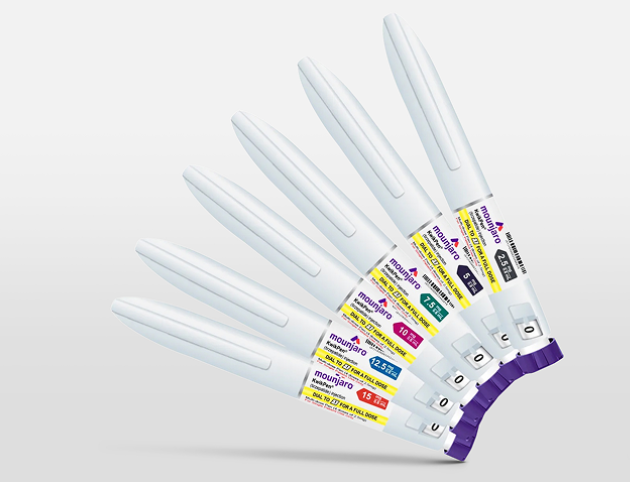

An improvised Zepbound dose can be wrong in two directions and the two look nothing alike. Too little produces months of quiet, expensive nothing. Too much produces vomiting, dehydration, and a real risk of kidney injury. A third failure sits underneath both: once the amount given is unknown, no symptom can be attributed to anything.
The safety list does not shrink with the amount
Every warning attached to tirzepatide is a property of the molecule, not of the milligram figure. The boxed warning stands on rodent data showing dose-dependent thyroid C-cell tumors at clinically relevant exposures, with human relevance unresolved, and the drug is contraindicated in anyone with a personal or family history of medullary thyroid carcinoma and in anyone with multiple endocrine neoplasia syndrome type 2. The labeled warnings that follow apply regardless of what a syringe happened to hold: severe gastrointestinal reactions, acute kidney injury from volume depletion, acute gallbladder disease, acute pancreatitis, hypersensitivity reactions including anaphylaxis and angioedema, hypoglycemia when an insulin secretagogue or insulin is on board, worsening of diabetic retinopathy, and rare reports of pulmonary aspiration during general anesthesia or deep sedation because gastric emptying is delayed.
The last one has a practical edge. Anyone taking tirzepatide is directed to tell healthcare providers before a planned procedure. A patient who has been dosing off-label amounts still needs to disclose it, and that conversation is harder when the amount cannot be stated.
The loud failure: too much at once
Overshooting produces gastrointestinal effects at the top end of the class profile. A systematic review of gastrointestinal adverse effects with anti-obesity medications in adults without diabetes describes nausea, vomiting, diarrhea, and constipation as the dominant reactions, concentrated around exposure changes. What turns those from unpleasant into dangerous is fluid loss. The label ties acute kidney injury explicitly to volume depletion and directs that renal function be monitored in patients reporting reactions that could cause it.
Poison center data show what the extreme end looks like in practice. A characterization of GLP-1 agonist exposures reported to a single United States poison center documented therapeutic errors as a recurring reason for contact, and a pharmacovigilance study of the FDA Adverse Event Reporting System found higher reporting odds of hospitalization for compounded GLP-1 products alongside higher odds of preparation errors and contamination.
The quiet failure: too little, for months
Underdosing announces nothing. There is no symptom, no alert, and no lab value that flags it. A person feels fine, sees the scale stop moving, and concludes the medication has stopped working, when the exposure may simply be below anything ever studied. The published maintenance results for tirzepatide come from labeled doses given weekly over long periods, and a trial of continued treatment for maintenance of weight reduction in adults with obesity in the United States found that ongoing exposure at a labeled dose is what holds a result in place.
The cost of the quiet failure is time. Months spent below an effective exposure are months a person is paying, injecting, and getting nothing measurable, while concluding the class does not work for them.
The failure specific to the container
The single-dose pen and single-dose vial contain no antimicrobial preservative. Their listed excipients are sodium chloride, sodium phosphate dibasic heptahydrate, and water for injection. The four-dose formats include benzyl alcohol and phenol and carry a defined in-use window for that reason. Puncturing a preservative-free container and storing it introduces a contamination and stability question the product was never tested against, and published work on the risks of pharmacy compounding and on microbial contamination rates in compounded sterile preparations shows this is a real hazard even where trained staff and controlled air are involved.
Injection-site infection presents late. Warmth, spreading redness, swelling, tenderness, or fever in the days after an injection is not a technique quibble; it is a same-day clinical problem.
What each signal is worth
| Signal | What it can indicate | Urgency |
|---|---|---|
| Severe or persistent vomiting, inability to keep fluids down | Volume depletion, risk of acute kidney injury | Same day |
| Severe abdominal pain radiating to the back | Acute pancreatitis | Immediate |
| Right upper abdominal pain, fever, jaundice | Acute gallbladder disease | Immediate |
| Swelling of face or throat, rash, difficulty breathing | Hypersensitivity reaction | Immediate |
| Spreading redness, warmth, or fever at an injection site | Injection-site infection | Same day |
| Shakiness, sweating, confusion on insulin or a sulfonylurea | Hypoglycemia from a concurrent agent | Treat, then report |
| Neck lump, hoarseness, difficulty swallowing | Symptom set named in the boxed warning | Prompt review |
| A result that flattens with no symptoms at all | Possible exposure below anything studied | Scheduled review |
The providers that dispense the branded product state their terms in public, which beats guessing at a kitchen table. Through LillyDirect a patient can buy the manufacturer’s single-dose vials, Henry Meds sells a monitored weight program, and HealthRX shows the price of a supervised month of Zepbound, so the choice rests on posted numbers rather than hearsay. Any of them keeps the exposure known, which is the one thing improvising destroys.
Monitoring only works if the input is known
Review appointments run on a simple comparison: this is what was given, this is what happened. Remove the first half and the second half means nothing. A prescriber looking at a stalled result cannot tell whether to hold, increase, investigate, or stop, and the safest available move is usually to restart from a known position, which costs the patient the time already spent.
That is the strongest practical argument against improvising, and it lands harder than any rule citation. The people most affected are the ones under the most cost pressure, since they are least able to afford lost months. Anyone weighing supply routes can compare the manufacturer’s own self-pay channel for single-dose vials against supervised cash-pay programs from services such as Ro, Hims & Hers, LifeMD, and FormBlends, and the question that matters at every one of them is who reviews symptoms between refills and how quickly a reported problem reaches a clinician.
Compounded product changes what can be interpreted
Compounded tirzepatide is not FDA-approved, and its concentration is set by the compounding pharmacy rather than by any reviewed label. That has a monitoring consequence rather than only a regulatory one: a symptom cannot be read against a known exposure when the exposure is not defined. The FDA has warned about counterfeit and unapproved products entering this market, which adds a supply-authenticity question on top of the dosing one.
Frequently asked questions
Do the boxed warning and contraindications still apply to a smaller amount?
Yes. Contraindications attach to the molecule and to the patient’s history, not to the milligram figure. A personal or family history of medullary thyroid carcinoma, or multiple endocrine neoplasia syndrome type 2, rules tirzepatide out at any amount, and no reduction changes that.
Which symptom gets ignored longest?
Dehydration. Vomiting and diarrhea get treated as expected side effects and tolerated for days, while the label ties acute kidney injury directly to volume depletion. Inability to keep fluids down, dark urine, or lightheadedness on standing should trigger contact rather than patience.
How would a person know a dose was too low?
Usually they would not, which is the problem. There is no symptom of underexposure. It shows up as a flat result with no other signal, at which point the only honest reading is that the amount given was never known well enough to evaluate.
Should a procedure team be told?
Yes. Tirzepatide delays gastric emptying and the label notes rare postmarketing reports of pulmonary aspiration during general anesthesia or deep sedation despite reported fasting. Any anesthesia or sedation team should know the medication is in use, along with when the last injection was given.