
For students enrolled in technology programmes at Amity University Online, the Amity Project is the culmination of years of technical education. Whether you are completing a BCA or an MCA, your project is expected to demonstrate real technical competence — not just theoretical knowledge. This guide is written specifically for tech students who want to understand exactly what Amity requires and how to deliver it.
Why Tech Students Face Unique Project Challenges
Technology projects occupy a unique space in academic research. They require both technical execution and academic documentation. An Amity BCA or MCA project that develops a software solution must also explain the methodology behind it, review relevant technical literature, and present results with the same rigour as any social science study.
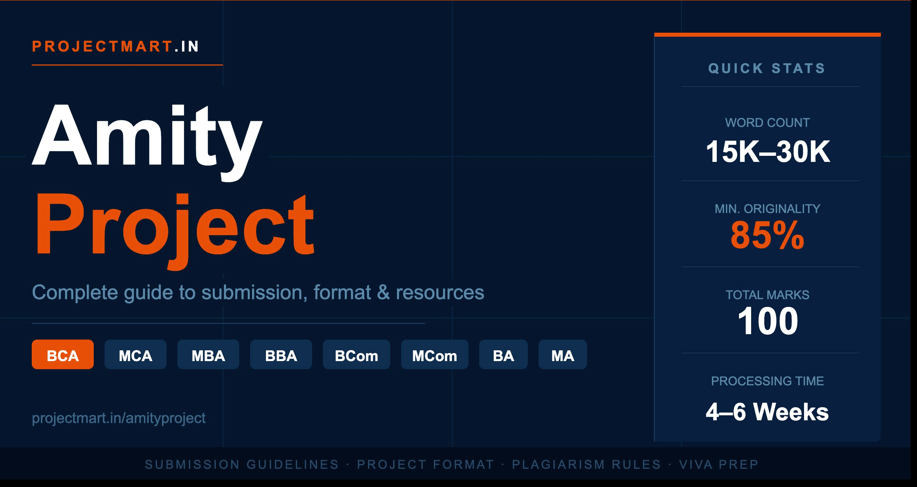
Amity’s official guidelines do not distinguish between tech and non-tech projects in terms of formatting or submission requirements — the same 15,000–30,000 word count, the same APA 6th edition citations, and the same three-stage submission process apply to everyone.
BCA vs MCA: What Each Programme Expects
Amity BCA Project topics typically cover:
- Web application development
- Database management systems
- Networking fundamentals and security
- Software engineering principles
- E-commerce platforms and systems
Amity MCA Project topics are more advanced and often include:
- Machine learning and artificial intelligence applications
- Advanced database architecture
- Cloud computing infrastructure
- Cybersecurity frameworks
- Mobile application development and deployment
The distinction matters because your literature review and methodology must align with the technical depth expected at your level.
Structuring the Methodology for a Tech Project
Tech projects often struggle with the research methodology section because students are more comfortable writing code than writing research frameworks. Here is how to translate tech work into Amity’s required methodology structure:
Research Design: Most tech projects use a descriptive or exploratory design — you are building or evaluating a system, which is an exploratory process.
Sampling Technique: If you are testing a system with users, specify your sampling approach — even if it is convenience sampling (non-probability).
Data Collection: System logs, user surveys, performance benchmarks, and test results all count as data collection tools.
Data Preparation: How you organized and cleaned your data — even if that data is performance metrics.
Data Analysis: Comparative analysis, statistical testing of performance metrics, or hypothesis testing against benchmarks.
The 85% Originality Rule in Technical Writing
Plagiarism in technical projects is a real risk because:
- Code documentation and technical specifications often overlap with published materials.
- Literature reviews in computer science frequently draw from a small pool of key papers.
- Standard definitions and technical explanations appear across many sources.
The solution is to ensure that analysis, interpretation, and discussion are your own — even when factual or definitional content is drawn from sources. Always cite sources, use your own words for analysis, and run your draft through a plagiarism checker before final submission.
APA Citations for Technical Sources
Amity mandates APA 6th edition for all citations. For tech students, this means knowing how to cite:
- Software documentation and technical manuals
- IEEE and ACM journal papers
- GitHub repositories and open-source projects (as applicable)
- Conference proceedings in computer science
- Technical white papers and industry reports
Running heads, page numbers, and proper reference lists at the end of every chapter are all required.
Common Mistakes in Tech Amity Projects
- Writing about what the software does rather than why it was built and what was learned
- Neglecting the literature review because “it’s a tech project”
- Using screenshots as the primary evidence of results without written analysis
- Missing the implications section — what does your project contribute to the field?
- Not preparing for Viva questions that will probe your methodology and results
See also: Business Startup: A Practical Guide to Building a Successful New Business
Start Your Tech Project Right
The Amity Project for BCA and MCA students is a serious academic undertaking. It requires both technical work and full academic documentation — and there are no shortcuts on either front. For originally written, technically sound project reports tailored to BCA and MCA programmes, visit www.projectmart.in/amityproject. Access BCA Project reports and MCA Project reports formatted to Amity’s exact standards.