
Staff training days and workshops often involve more than simply sitting in a room and listening to a presentation. People may arrive early, check in, collect materials, move between sessions, take notes, participate in group activities, and spend several hours away from their normal desks. When the day is not well prepared, small inconveniences can quickly affect focus and comfort.
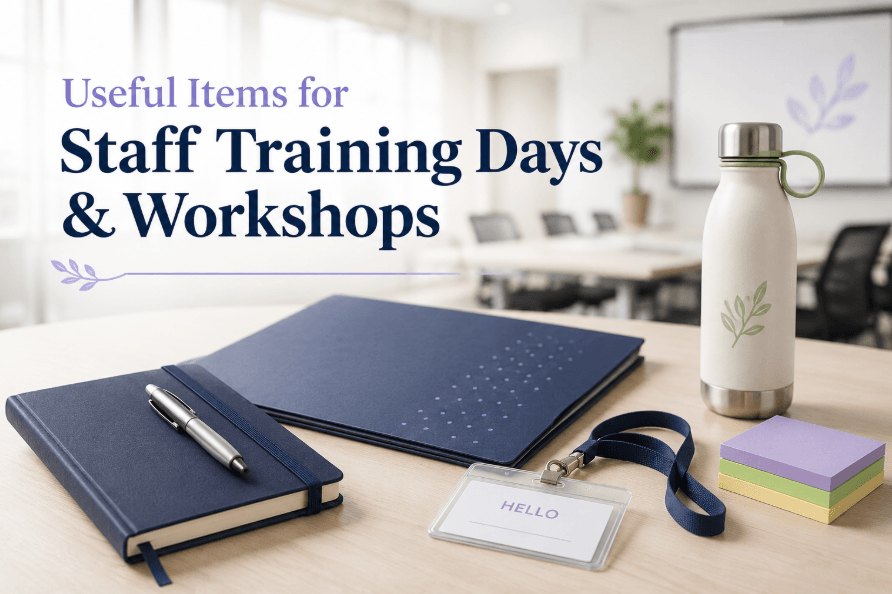
The right items can help participants stay organized and engaged. A workshop does not need an expensive setup to feel professional. In many cases, simple supplies such as notebooks, pens, folders, name badges, water bottles, and small table items are enough to make the day easier for everyone involved.
For businesses planning training programs, the goal should be to support the experience, not overload people with unnecessary products. Useful items should help participants listen, write, move, drink, and follow the schedule with less friction.
Why Training Days Need Simple Support Items
Training days often require people to step outside their normal routine. They may leave their desks, attend sessions in another room, travel to a different office, or join a group workshop with people they do not usually work with. Because of this, small support items can help participants feel more prepared.
A notebook and pen are still useful, even when presentations are digital. People often want to write down ideas, questions, action steps, or names. Printed schedules or folders can also help attendees understand what is happening next without checking their phones constantly.
Name badges or table cards are helpful when the workshop includes people from different departments, offices, or teams. They make introductions easier and help create a more comfortable environment. Small desk items, sticky notes, and folders can also support group exercises and discussion sessions.
These products work best when they are easy to use immediately. If participants need to ask what something is for, it may not be necessary. Good training supplies should feel obvious, useful, and connected to the day.
Keeping Participants Comfortable During Long Sessions
Comfort matters during training. A person who is thirsty, tired, distracted, or unable to find their materials may not get as much value from the session. Small comfort items can help people stay focused.
Water is especially important during long workshops. Participants may not want to leave the room repeatedly, and shared drink stations may not always be nearby. Providing drinkware or encouraging attendees to bring their own bottle can make the day more comfortable.
For companies, schools, or organizations preparing workshop materials, MeetPrinting offers practical custom product options for business and group needs. In this kind of setting, custom water bottles can work well because they support hydration while still feeling useful after the training day is over.
Breaks also matter. Snacks, light refreshments, and clear break schedules can help participants recharge. A simple bag or folder can keep handouts and notes together so people do not lose materials between sessions.
See also: Clip-On Thermal Imaging Attachment for Wildlife Observation
Choosing Items That Stay Useful After the Workshop
The best training items should not be useful for only one day. A notebook can be used in future meetings. A folder can hold documents. A bottle can stay on a desk or travel to work. A pen can continue to be used long after the session ends.
This is important because products that stay useful create better long-term value. If something is only relevant to one workshop, it may be thrown away quickly. If it fits naturally into work life, it has a much better chance of being kept.
Design should also stay clean and professional. A company logo, training name, or short message can be enough. Overly crowded designs may make the product feel less suitable for everyday use. Practical items work best when they look like something people would choose to keep on their own.
Final Thoughts
Staff training days and workshops are easier to manage when participants have simple, useful items. Notebooks, pens, folders, badges, drinkware, and small organization tools can help people stay focused and comfortable throughout the day.
The best products are not the most complicated ones. They are the ones that support real workshop behavior: listening, writing, moving, drinking, organizing, and following along. When training items continue to be useful afterward, they create value beyond the session itself