Newsletter Subscribe
Enter your email address below and subscribe to our newsletter
Enter your email address below and subscribe to our newsletter

 ByJohn A
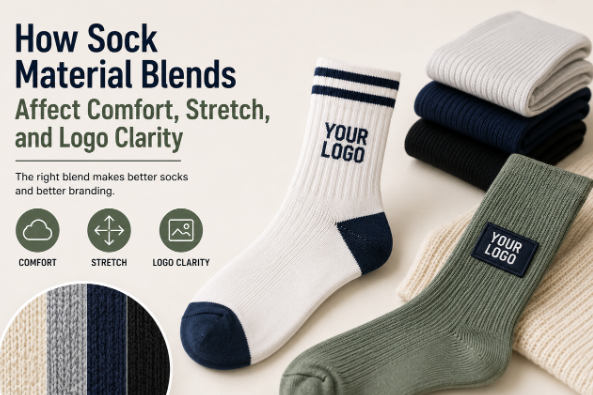
Sock material is one of the most important details in a custom sock order. A sock may look good in a design mockup, but if the material feels rough, stretches poorly, or does not hold the logo clearly, the final product may disappoint buyers.
For B2B orders, material choice affects comfort, durability, fit, color, cost, and how well the design appears after production. A school club, gym, company team, or event organizer should not choose sock material only by appearance. The blend should match how the socks will be worn.
Most custom socks are not made from one fiber only. They usually use a blend because each material has a different role.
Cotton can add softness and breathability. Polyester can improve color strength and durability. Nylon can help with shape retention and abrasion resistance. Spandex or elastane adds stretch so the sock fits securely.
A common everyday sock blend may include 60–80% cotton or polyester, with 15–35% nylon or polyester support fibers, and 2–5% spandex for stretch. The exact blend depends on the sock type, thickness, and intended use.
See also: Clip-On Thermal Imaging Attachment for Wildlife Observation
Cotton-blend socks are often chosen for casual wear, school merchandise, company gifts, event items, and comfortable giveaways. They feel familiar and soft, which makes them easy for many people to accept.
However, high cotton content is not always better. A sock with too much cotton and not enough support fiber may lose shape faster or hold moisture longer. For daily custom socks, balance is more important than simply choosing the softest material.
For buyers planning custom socks with logo, the material blend should be reviewed together with sock height, logo method, and expected wear frequency.
Polyester and nylon are useful when the buyer wants stronger color, better durability, or a more active-use sock. These materials can help the sock hold shape after repeated wear and washing.
For jacquard designs, synthetic fibers may also help colors appear more consistent. This matters when the sock includes brand colors, team colors, or repeated patterns.
Stretch changes how a logo looks when the sock is worn. A logo that looks clear when flat may stretch across the calf or ankle. This is especially important for side logos, calf logos, and all-over patterns.
Different sock shapes also affect design placement. Buyers can review a guide to types of socks before deciding whether the design fits no-show, ankle, crew, or knee-high socks better.
Before choosing a material blend, check:
Sock material affects more than softness. It changes stretch, durability, logo clarity, moisture control, and the final customer experience.
For custom orders, the best material blend is the one that fits the sock’s purpose. A comfortable daily sock, a sports sock, and an event sock may all need different fiber choices.