
Modern manufacturing is entering a stage where speed alone is no longer enough. Industries now require packaging systems that can maintain accuracy, reduce waste, improve hygiene, and operate continuously without interruption. As consumer demand grows and supply chains become more competitive, packaging technology has evolved into one of the most important parts of production infrastructure.
One of the most impactful innovations in this transformation is the form fill seal machine, a fully automated system designed to create packaging, fill it with products, and seal it in a single continuous process. This technology has significantly changed how food, pharmaceutical, cosmetic, and chemical industries manage their final production stages.
A form fill seal machine is not just a packaging tool. It is a high-speed automation solution that combines multiple operations into one streamlined system, reducing human involvement while increasing production consistency and efficiency.
The Evolution of Modern Packaging Systems
In earlier industrial setups, packaging was divided into separate stages. Products were first filled manually or semi-automatically, then transferred to another system for sealing and labeling. This fragmented approach often created delays, contamination risks, and inconsistencies in final output.
As industries scaled up, these inefficiencies became more visible. Businesses needed a solution that could reduce handling time and improve overall production flow.
This need led to the development of integrated packaging systems that combine multiple functions into a single automated machine, making packaging faster, cleaner, and more reliable.
See also: Clip-On Thermal Imaging Attachment for Wildlife Observation
What a Form Fill Seal Machine Actually Does
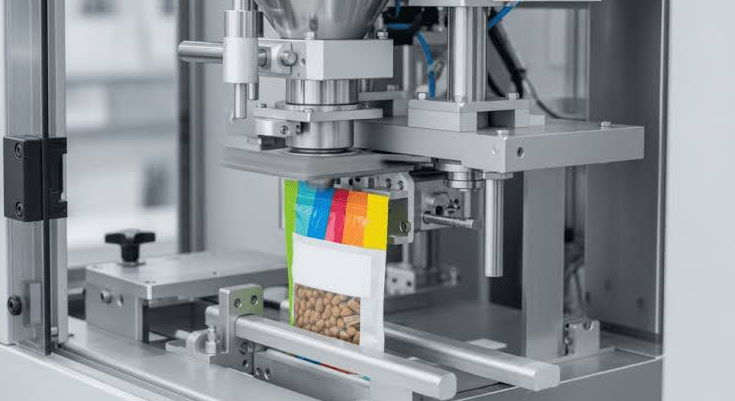
A form fill seal system works through a continuous cycle. It forms packaging material into a specific shape, fills it with a controlled quantity of product, and seals it immediately to ensure protection and freshness.
This entire process happens automatically without manual intervention, which significantly reduces contamination risks and improves production speed.
The form fill seal machine can handle liquids, powders, granules, and even semi-solid products depending on its configuration, making it a highly versatile solution across different industries.
Types of Form Fill Seal Technology in Industry
There are different configurations of form fill seal systems depending on production requirements. Vertical systems are commonly used for granular and powdered products, while horizontal systems are preferred for liquid or solid items that require precise placement.
Each system is designed to optimize efficiency based on product type, packaging material, and production speed requirements.
This flexibility allows manufacturers to choose systems that best fit their operational needs without compromising performance.
Efficiency Gains in High-Speed Production Environments
One of the most important advantages of using a form fill seal system is the dramatic improvement in production efficiency. Traditional packaging methods often involve multiple machines and manual handling, which slows down the process.
By combining forming, filling, and sealing into one continuous cycle, these machines eliminate unnecessary steps and reduce production time significantly.
A form fill seal machine allows manufacturers to achieve high-speed output while maintaining consistent packaging quality, making it ideal for large-scale industrial operations.
Improved Hygiene and Product Safety
Hygiene is a critical factor in industries such as food and pharmaceuticals. Any exposure during packaging can lead to contamination and product spoilage.
Form fill seal systems reduce this risk by minimizing human contact during the packaging process. Since the product is handled in a closed and controlled environment, the chances of contamination are significantly reduced.
This makes the system highly suitable for industries where safety and cleanliness are top priorities.
Reduction of Labor Dependency and Operational Costs
Manual packaging requires a large workforce, especially in high-volume production environments. This increases operational costs and introduces variability in packaging quality.
By adopting a form fill seal machine, manufacturers can significantly reduce labor dependency. This allows businesses to optimize workforce allocation and reduce long-term production costs.
Automation also ensures consistent output, reducing errors and minimizing product waste.
Flexibility Across Multiple Industries
Form fill seal technology is widely used across various industries due to its adaptability. It can handle different product types, including food items, pharmaceuticals, cosmetics, and chemical products.
Each application requires specific packaging parameters such as sealing temperature, fill volume, and packaging material type. These machines are designed to adjust to these variations efficiently.
This flexibility makes them an essential part of modern manufacturing systems.
Integration With Automated Production Lines
Modern industrial systems rely heavily on automation and machine integration. Packaging machines are now part of a larger synchronized production network.
Form fill seal systems can be connected with weighing systems, conveyor belts, labeling machines, and quality control systems to create a fully automated workflow.
This integration ensures smooth product movement from production to final packaging without delays or manual handling.
Reliability and Continuous Operation
Industrial environments demand machines that can operate continuously for long hours without failure. Any downtime can disrupt supply chains and impact business performance.
Form fill seal systems are designed with durable components and advanced control systems that ensure stable performance under continuous operation.
A reliable form fill seal machine helps maintain uninterrupted production flow, which is essential for meeting high market demand.
Future Trends in Form Fill Seal Technology
The future of packaging automation is moving toward smarter, more adaptive systems. Emerging technologies such as artificial intelligence, predictive maintenance, and real-time quality monitoring are being integrated into modern machines.
These innovations will allow systems to automatically adjust settings based on product type and production conditions, improving efficiency and reducing manual setup requirements.
As technology continues to advance, form fill seal systems will become even more intelligent and capable of supporting fully autonomous production environments.
Conclusion
The form fill seal machine has become one of the most important innovations in modern packaging automation. By combining forming, filling, and sealing into a single continuous process, it has transformed how industries handle large-scale production.
It improves efficiency, enhances hygiene, reduces labor dependency, and ensures consistent packaging quality across different sectors.
As manufacturing continues to evolve toward fully automated and intelligent systems, form fill seal technology will remain a key component in achieving fast, reliable, and high-quality packaging operations.