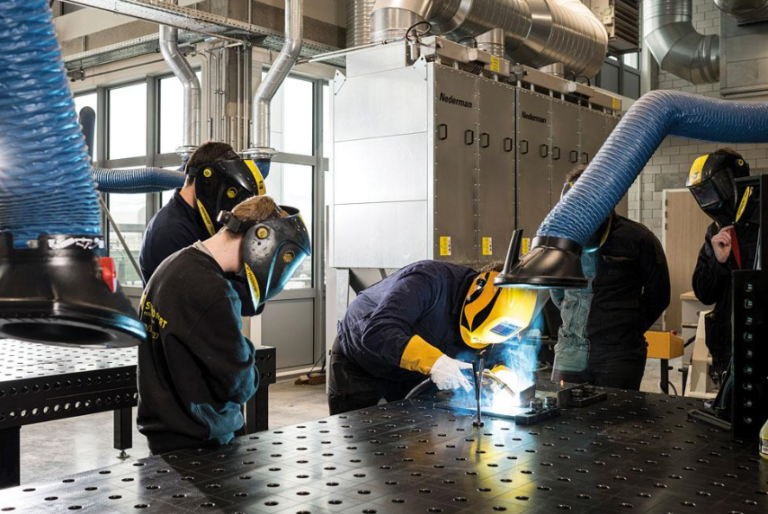

Manufacturing has entered a phase where accuracy is no longer a secondary requirement but the main benchmark of industrial success. Every sector, from automotive production to electronics assembly and medical device fabrication, is now focused on achieving higher precision with fewer errors and faster output. In this environment, traditional welding methods are slowly losing relevance because they cannot consistently meet the demands of modern engineering.
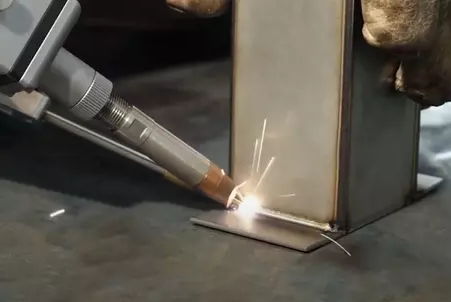
Laser welding has emerged as a powerful alternative that uses concentrated light energy to join materials with exceptional control. This process reduces thermal damage, improves structural integrity, and produces cleaner welds compared to conventional techniques. As industries continue shifting toward advanced fabrication systems, the importance of this technology continues to grow.
At the center of this transformation is the role of a laser welding machine manufacturer, who is responsible for developing the technology that enables this level of industrial precision. Their work directly influences production quality, machine stability, and long-term manufacturing efficiency.
The Industrial Shift Toward Precision-Driven Production
Modern industries are no longer focused only on output quantity. The real priority has shifted toward product accuracy, consistency, and performance reliability. Even small imperfections in welding can lead to structural failure, product malfunction, or increased production waste.
Traditional welding processes often struggle with these challenges due to uneven heat distribution and mechanical inconsistencies. Laser welding technology solves these problems by delivering controlled energy directly to the material interface, ensuring precise fusion without unnecessary deformation.
This transition marks a major shift in how industries design and build production systems.
See also: Clip-On Thermal Imaging Attachment for Wildlife Observation
Engineering Complexity Behind Laser Welding Systems
A laser welding system is not a simple machine. It is a highly integrated engineering structure combining optics, electronics, thermal control, and motion systems. Every component must work in perfect coordination to ensure stable and accurate welding output.
A laser welding machine manufacturer must design systems that maintain beam consistency, regulate energy output, and manage heat distribution efficiently. This requires advanced knowledge in photonics, mechanical design, and industrial automation.
Even small engineering variations can significantly affect welding quality, machine lifespan, and operational reliability.
Precision as a Core Requirement in Modern Manufacturing
Today’s manufacturing environment demands extremely tight tolerances. Industries such as aerospace, electronics, and medical equipment cannot afford even minor inconsistencies in welding quality.
Laser welding provides the level of precision required for such applications by allowing controlled penetration and minimal heat-affected zones. This ensures that materials retain their structural integrity while achieving strong and reliable joints.
As product complexity increases, precision has become a non-negotiable requirement in industrial production.
Efficiency Improvements Through Laser Welding Technology
Efficiency is one of the most important benefits of laser welding systems. Traditional welding often requires additional finishing processes such as grinding, polishing, or rework due to imperfections.
Laser welding reduces or eliminates many of these steps by producing clean and accurate welds in a single process. This significantly improves production speed and reduces operational costs.
In addition, laser systems can operate at high speeds while maintaining accuracy, making them suitable for both large-scale production and precision-based manufacturing.
Role of Automation in Modern Welding Systems
The manufacturing industry is rapidly moving toward automation and smart factory systems. Machines are now expected to operate with minimal human intervention while maintaining consistent performance.
Laser welding technology integrates seamlessly into this environment. It can be connected with robotic systems, CNC machines, and automated production lines for fully synchronized operation.
A forward-thinking laser welding machine manufacturer ensures that their systems are compatible with Industry 4.0 technologies, enabling real-time monitoring and intelligent process control.
This integration enhances productivity while reducing operational complexity.
Material Flexibility and Industrial Applications
Laser welding technology is highly versatile and can be applied to a wide range of materials, including steel, aluminum, copper, titanium, and advanced alloys.
This flexibility makes it suitable for multiple industries such as automotive manufacturing, aerospace engineering, energy systems, electronics production, and precision tooling.
Each application requires specific welding parameters, including beam intensity, focus control, and travel speed. Manufacturers must design systems that can adapt to these varying requirements without compromising performance.
Reliability and Long-Term Operational Stability
Industrial environments require machines that can operate continuously under heavy workloads. Any interruption can lead to production delays and financial losses.
Laser welding systems are designed with stable optical components, advanced cooling systems, and durable mechanical structures to ensure long-term reliability.
A high-quality laser welding machine manufacturer focuses on system durability and consistency to minimize maintenance requirements and maximize uptime.
This reliability is one of the key reasons industries are increasingly adopting laser welding technology.
The Future of Laser Welding Technology
The future of laser welding is closely connected to advancements in automation, artificial intelligence, and intelligent manufacturing systems.
Future systems are expected to include adaptive energy control, predictive maintenance features, and real-time quality monitoring capabilities.
These innovations will further enhance precision and reduce the need for manual intervention in industrial processes.
Manufacturers who continue to innovate will play a major role in shaping the next generation of manufacturing systems.
Conclusion
Laser welding technology has become a critical part of modern industrial development due to its ability to deliver precision, efficiency, and reliability. It has transformed how industries approach material joining and production optimization.
However, the true performance of this technology depends heavily on the engineering expertise behind it.
A laser welding machine manufacturer is not just a supplier but a key driver of industrial innovation. Their role in designing, developing, and optimizing advanced welding systems directly impacts manufacturing success.
As industries continue evolving toward automation and high-precision production, the importance of advanced laser welding manufacturers will continue to grow as a foundation of modern engineering progress.